
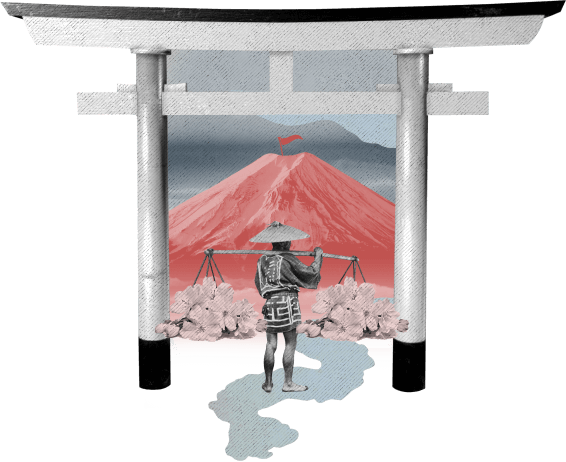
Provenance for physical art, free for the collector.
- $0 for a collector to register, verify or trace an artwork; the platform pays the gas
- 4 months from chain research to a finished gallery, storefront and back office
What did Bushido build for this Web3 art gallery?
Bushido designed and built a Web3 gallery that links physical artworks to on-chain provenance, so collectors can verify and trade real-world art backed by NFTs with upgradeable metadata. Four months, two and a half developers and a delivery manager. It includes smart contracts, a backend, the gallery storefront and an admin dashboard. Stack: Next.js, Tailwind, Solidity on Polygon, Hardhat, OpenZeppelin, Moralis, Infura, MongoDB, Retool, SST and AWS Lambda@Edge, S3 and CloudFront.
Digital companion token.
Web3, Art & Culture
4 months, 2022
2.5 developers, 1 delivery manager
Smart Contracts with backend system and Web3 gallery storefront. Admin dashboard
Next.js, Tailwind, Polygon, Solidity, Hardhat, OpenZeppelin, Moralis, Infura, MongoDB, Retool, SST, AWS (Lambda@Edge, S3, Cloudfront)
The starting point
Our partner wanted a gallery for traditional art, built on-chain. Galleries and artists record the life of a physical artwork as signed ‘Events’ — who made it, who framed it, who bought it — so its provenance can be proved and traced as it changes hands.
The token is not digital art. It is a companion to a physical piece: valueless on its own, free for the user, and one place for the gallery view, proof of ownership, visual history and certificate of authenticity. Records had to be correctable without ever losing what was there before.
He came with a brief and a finished design, and little time to spare: he was running several businesses at once.
What we built
-
Chose the chain before writing a contract.
Our partner proposed Immutable X. Research showed it keeps data off-chain, charges gas when a user moves it on-chain, and could not be customised enough for this project. We agreed on Polygon instead: Ethereum’s security without its fees.
-
Made every action free for the collector.
Gasless meta-transactions: the platform pays the gas fees, so registering, verifying or tracing an artwork costs the collector nothing.
-
Put the record on-chain and the media where it fits.
ERC-721 tokens with all artwork metadata on-chain, images on IPFS, including photos of the artwork’s condition, and proof-of-ownership videos on central storage for convenience. A custom method returns every asset for a token, where ERC-721 supports only one.
-
Let records be corrected without rewriting history.
Metadata can be updated, but every change records who made it and what changed, and can be accepted or declined. A mistake gets an amendment on top; the error itself is never removed. Upgradeable contracts mean new attributes can be added later.
-
Made provenance signable.
Each artwork carries on-chain Events — created, sold, gifted, auctioned, framed — that the parties named in them can sign. The gallery shows only signatures from users the platform has verified, which turns the history into a certificate of authenticity. This is what set the gallery apart from others in Web3.
-
Built the back office in a low-code tool.
Retool for the internal tools: verifying users, approving mint requests from unverified users, adding artists, marking trending pieces. Uploads from verified users mint automatically. Low code cut the back-office development time, and our partner could run it himself.
All of it was built from the brief and the design, with minimal time asked of a stakeholder running multiple businesses.
Before and after
| Before | After | |
|---|---|---|
| Chain | Immutable X proposed: data off-chain, gas to move it on-chain, little room to customise | Polygon, with Ethereum’s security and low fees |
| Cost to the collector | Gas whenever data moves on-chain | $0: gasless meta-transactions, the platform pays |
| Correcting a record | Editable data or an immutable record, not both | Amendments on top of a history that is never erased |
The result: a gallery, proof of ownership, visual history and certificate of authenticity in one, free for the collector to use.
Questions people ask about this gallery.
How can artwork metadata be corrected without breaking provenance?
Bushido built an amendment mechanism: metadata can be updated, but the original record is never removed. A mistake is corrected by adding a correction on top of an immutable history rather than by editing history.
How does the gallery act as a certificate of authenticity?
Events are recorded on-chain, so each art piece carries a traceable event history that functions as a certificate of authenticity for that physical work.
Who pays the gas fees?
Nobody visible to the collector. Bushido researched the chain and architecture specifically to reduce transaction and gas costs and keep the experience free for the end user.
Yours is next.
Same team, sharper tools. Tell us where you are and we will tell you what it takes — scope, shape and a timeline we would actually hold ourselves to — on a 30-minute call with an engineer.